
Keep Your Roofing Company
Booked Out
&
Charge More Per Replacement With BEFORE-THE-QUOTE SELLING.
Create more demand than your crews can handle.
Grow revenue and margins at the same time.
Doing your homework on us? See our due diligence page.
Are the Crews Booked? Is There Money Left Over?
I ran a crew for years, so I get it.
You want your crews booked weeks out and more profit left after materials, labor, and overhead.
Here’s what I’ll do for you:
- Keep your crews booked weeks ahead with more replacement calls and estimate requests.
- Make more profit per replacement with BEFORE-THE-QUOTE SELLING, so homeowners understand what makes a roofer worth paying more for before your estimator arrives, making it easier to win jobs without cutting your price.
As a million-dollar roofer, you can pull three levers to make more profit on every roof you sell.
Each one works toward the same two outcomes: selling enough roofs to keep your crews booked, and making more profit on every roof you sell. I want to help you do both.
Get replacement estimates at a lower cost
At a cost that leaves enough room to make money when the roof actually sells.
Close more roofs
A better chance to turn more of those estimates into sold roofs, without cutting the price just to win the job.
Make more profit on every replacement
Charge what the job is actually worth and cut out the unnecessary discounting.
Every roofer is on the same hamster wheel.
Get more calls.
Get more estimate requests.
Bring the cost per estimate down.
And I agree, you absolutely need estimates coming in at a cost that makes sense for your business. But once that homeowner requests an estimate, the marketing usually stops.
Your estimator gets sent out and is left to explain everything: why your company is different, what the homeowner should care about, why your roof costs more, and why they should choose you over the cheaper quote.
Your estimator is basically being asked to pull the homeowner through your entire sales process from scratch, in one appointment.
When a homeowner requests an estimate, they haven’t chosen your company. They’ve invited you out. And chances are, you’re one of several roofing companies they’re considering.
Every roofer says they use good materials.
Every roofer says they install the roof properly.
Every roofer says they stand behind their work.
The homeowner can’t inspect your workmanship from the driveway, and most of those claims sound the same. So if they can’t clearly see why one company is worth more than another, the easiest difference to compare is the number at the bottom of the quote.
It doesn’t matter if your company actually does better work. If the homeowner can’t see why those differences matter, you just look more expensive.
I’m not in business to win by being the cheapest. I want you to win because the homeowner can actually see why your company is worth more.
- Tear-off & disposal
- Architectural shingles
- Underlayment & flashing
- Cleanup
- Warranty
- Tear-off & disposal
- Architectural shingles
- Underlayment & flashing
- Cleanup
- Warranty
- Tear-off & disposal
- Architectural shingles
- Underlayment & flashing
- Cleanup
- Warranty
If the homeowner sees your $22,000 roof and the other guy’s $21,500 roof as basically the same thing, why would they pay you the extra $500? Even a few hundred dollars can cost you the job.
Before-The-Quote Selling starts the moment they ask for an estimate.
Once a homeowner requests an estimate, we use the time before your estimator arrives to shape how they compare roofing companies.
Through short videos and emails in your company’s name, we show them what matters besides price, what differences to look for, what questions to ask, and what your estimator should be able to prove.
We’re not trying to teach them roofing. You can’t just tell a homeowner you’re better. That doesn’t work. They need to see the difference and come to that conclusion themselves.
We guide them toward the right questions, then let your estimator prove the difference on their actual roof.
We’re trying to move them out of “Who’s the cheapest?” and into “Is this company worth paying more for?”
That’s a much better conversation for your estimator to walk into. Instead of starting from zero with someone who’s purely comparing numbers, your estimator is meeting a homeowner who’s already thinking about what they’re actually getting for the money.
We build the page, videos, emails, and follow-up in your company’s name and plug it into the estimate process you’re already running. You keep selling roofs the way you already do.
- Estimate requestedThey land on a page in your name. Common questions answered, expectations set.
- Appointment bookedFirst email and video: what matters besides price.
- Two days beforeHow to compare quotes. Bring the other bid. Have both decision-makers there.
- Day beforeWhat to ask, and what your estimator should show them.
- Your estimator arrivesShows what was found, explains the fix, proves the difference on the roof.
First, enough replacement estimates coming in at a cost that works.
We start with Google because the demand is already there. Homeowners in your market are already looking for a roofer. Our job is to put you in front of more of them and turn more of that demand into calls and estimate requests.
Without enough replacement demand, none of the rest of this works.
If you already have Google Ads, SEO, Maps, or social media ads running, good. I don’t care where the estimate comes from. I care whether you’re getting enough of them, what they cost you, and how much profit you’re actually keeping on the jobs you win.
If you’re not, something is broken. You’re either not showing up enough, not turning enough homeowners into estimate requests, or paying too much for the ones you get. We find where the bottleneck is and fix it.
And the cheapest estimate request isn’t always the cheapest sold roof. A cheap inquiry from somebody who wasn’t actively looking for a roofer can end up costing you more by the time you actually sell a job than an estimate request from somebody who went to Google looking for a roofing company today.
So we track it all the way through: calls, estimate requests, cost per estimate, and once your office marks the job sold, what it actually cost you to sell the roof and the profit after every expense on the jobs that trace back to us. That gives us the data to see exactly where the bottleneck is in your sales process, fix it, and turn every dollar you put into marketing into more sold roofs.
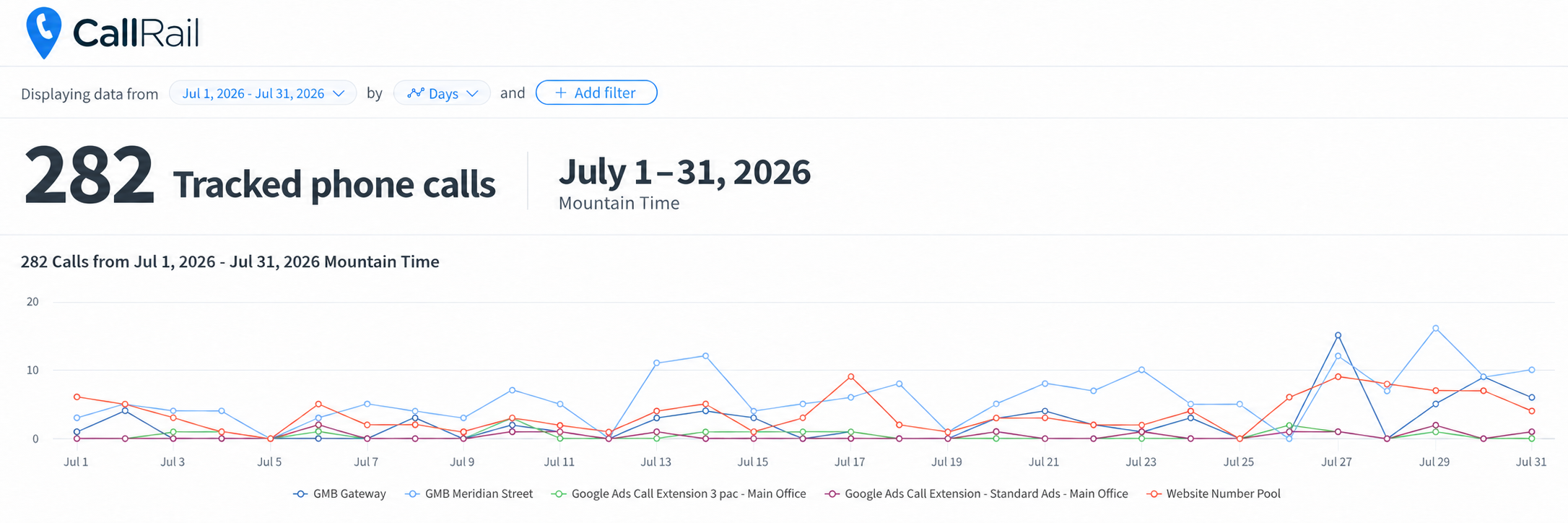
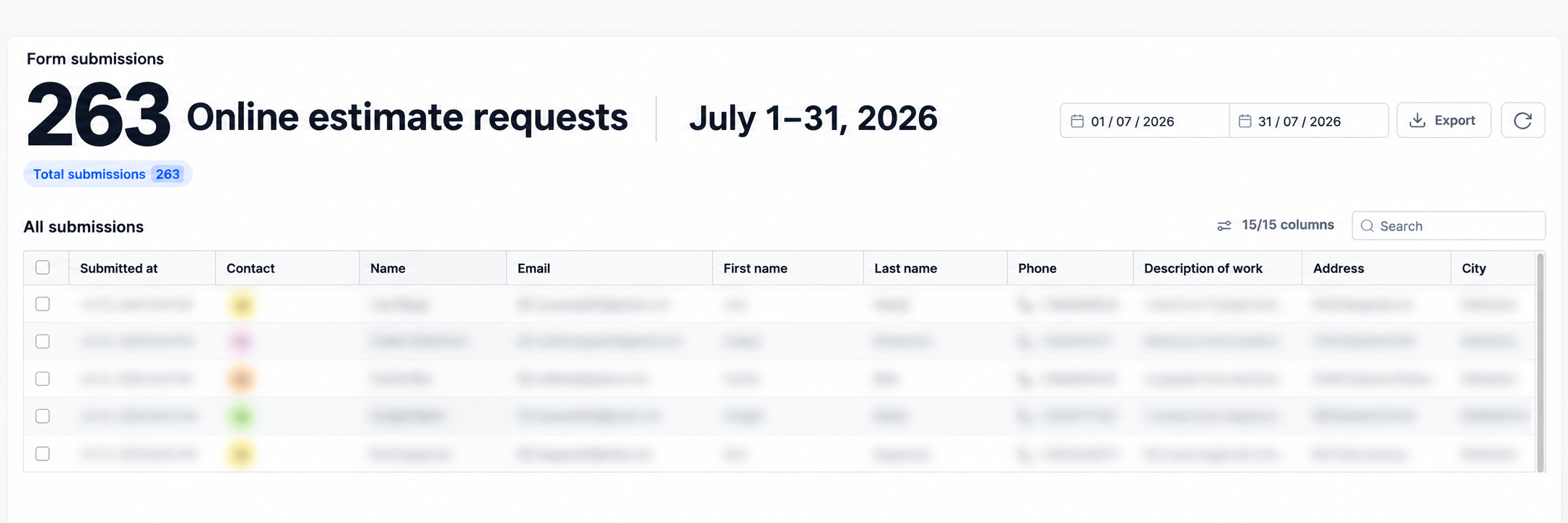
See more months ↓
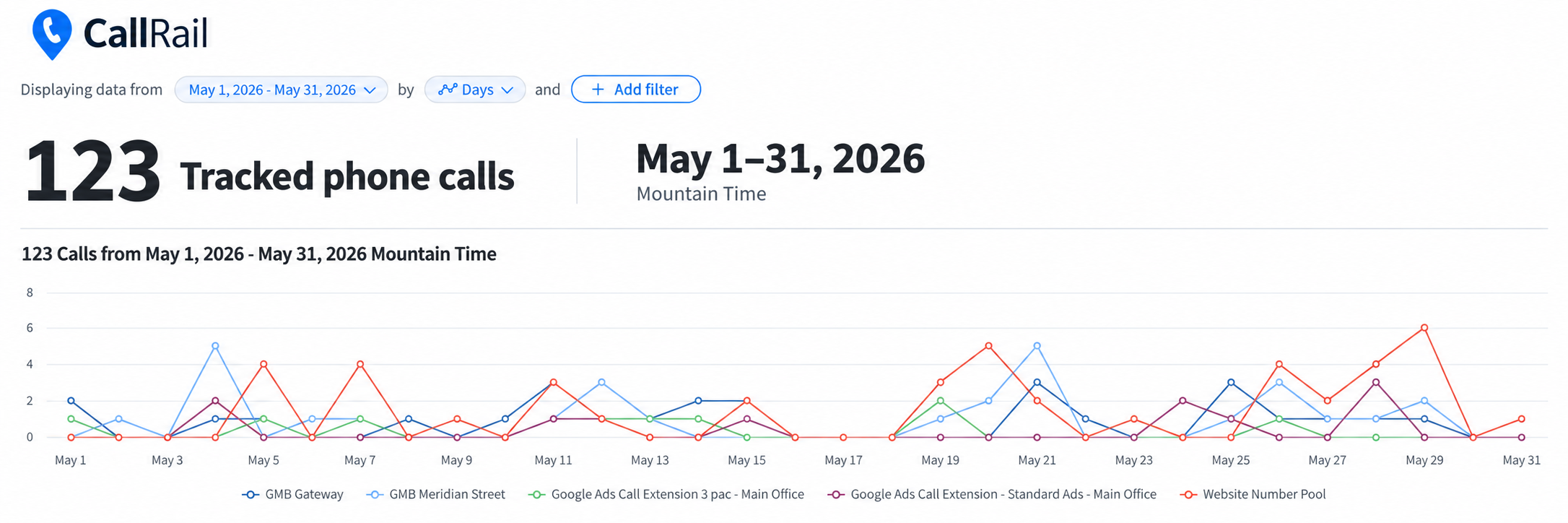
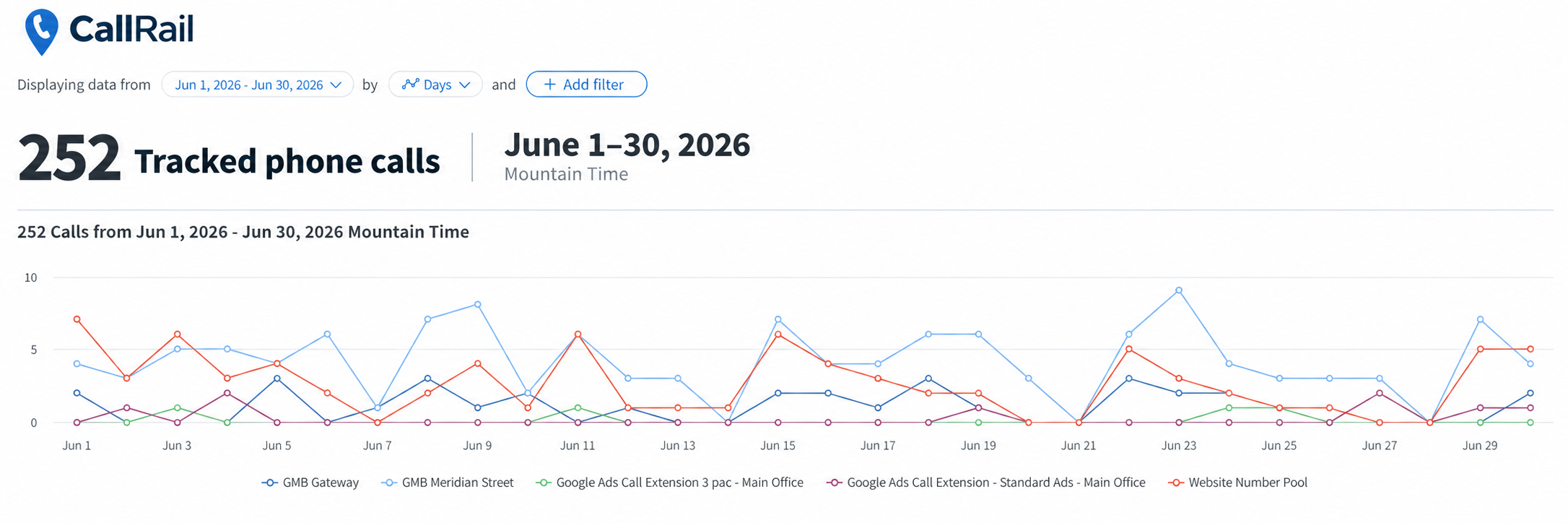
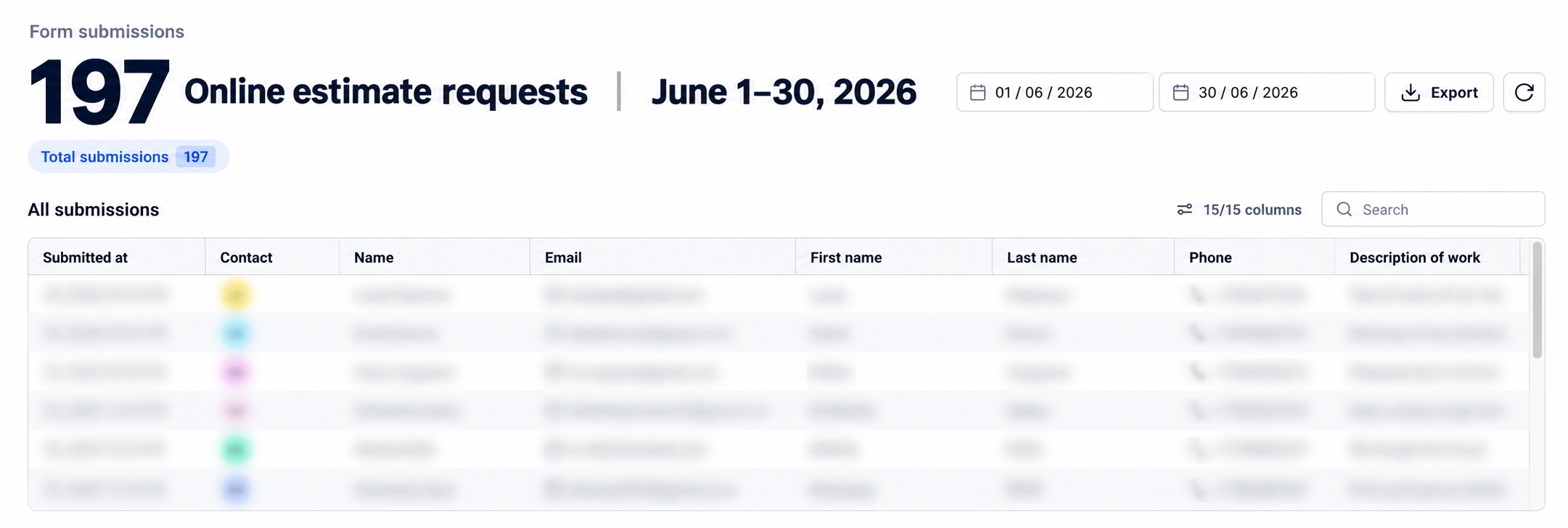
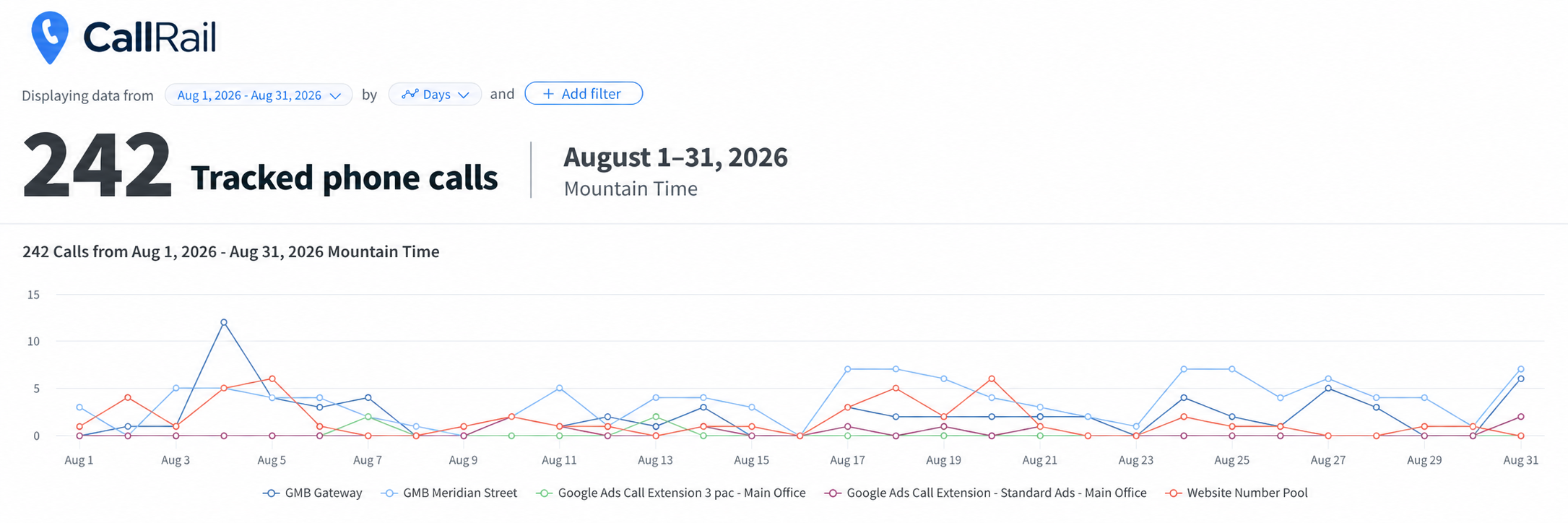
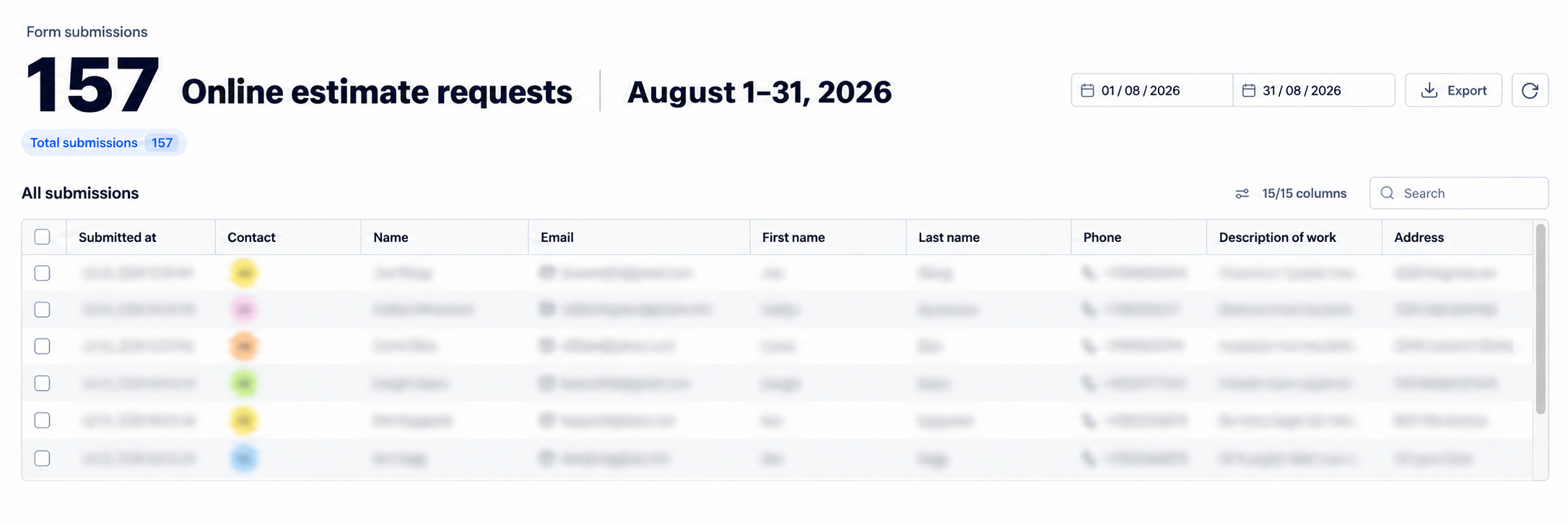
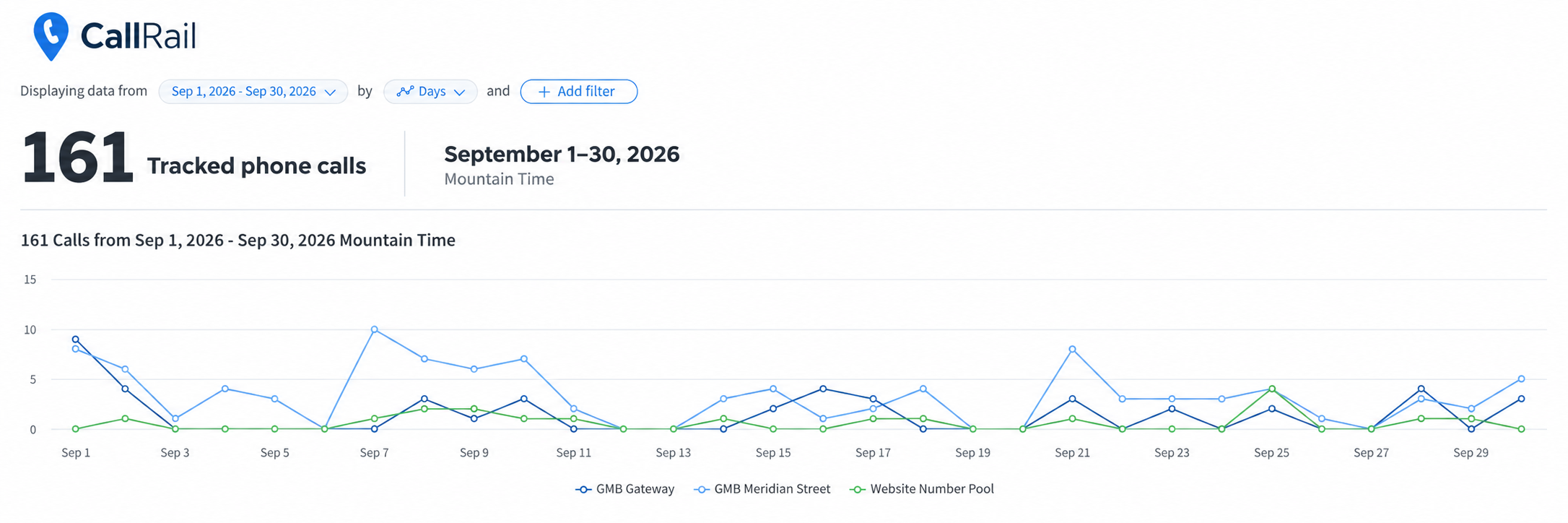
One client’s tracked numbers. Not typical. Not a promise. See our Results Disclaimer.
Then, more profit on every replacement you sell.
Our clients can charge more per job for two simple reasons.
First, the homeowner has a better reason to believe the company is worth paying more for. That gives your estimator more confidence to charge what the job is worth instead of immediately discounting to save it.
Second, when you’re selling enough roofs to keep your crews booked, not every estimate has to turn into a job. You can quote the job for what it’s actually worth and let the price-only shopper walk.
Now look at what pricing does to your gross profit. Say a roof should sell for $20,000, and it costs you $16,000 to install. That leaves $4,000 in gross profit.
Now say your estimator knocks 10% off just to win the job. Instead of $20,000, you sell it for $18,000. Your job costs are still $16,000, so now you only make $2,000. You dropped your price by 10%, but you cut your gross profit in half.
Your crew didn’t get cheaper.
Your materials didn’t get cheaper.
Your dump fees didn’t get cheaper.
That $2,000 came straight out of the job’s profit.
Now run the same math the other way. Say you sell that $20,000 roof for $22,000. Same $16,000 in job costs. Now you make $6,000 in gross profit. You increased the selling price by 10%, but your gross profit went up by 50%. Same roof. Same crew. Same amount of work.
Once you’re booked out, a rush fee does the same thing. If somebody wants to move to the front of the line, give them the option to pay an extra 15 or 20% to have their job prioritized. They don’t have to take it. But if they do, you’re doing the same roof with the same crew, materials, and job costs, so most of that extra 15 or 20% goes straight to your profit.
Same roof. Same crew. Same amount of work. Only the price changed.
How many roofs cover your ad spend?
I like to start with the minimum: how many additional roofs do you need to sell to earn back what you spend on ads?
Say a replacement sells for $20,000 and costs $16,000 in materials, labor, and other direct job costs. That leaves $4,000 in gross profit.
Using that $4,000 gross profit per roof as an example, here’s the minimum number of roofs needed to cover your ad spend:
| Monthly ad spend | Minimum roofs to cover ad spend |
|---|---|
| $8,000 | 2 |
| $12,000 | 3 |
| $16,000 | 4 |
| $24,000 | 6 |
| $50,000 | 13 |
These are the minimums to cover the ads, not our targets.
The goal is to sell far more roofs from that same budget. Once the ad spend is covered, each additional roof adds another $4,000 in gross profit toward overhead, our fees, and what you keep.
But before you spend anything, you should know what it takes to earn it back.
Illustrative numbers, not promised results. Management and setup fees are additional. Your margins change the math. We’ll run your numbers, including our fees, on the call.
Everything we do for your roofing company.
More replacement demand → enough sold work to stay booked → no need to win every estimate → easier to hold the price → more profit per replacement
Before-The-Quote Selling → homeowner compares on more than price → estimator proves the differences → better chance to close and hold the price
Top of Google for Roof Replacements
We run your Google Search ads so your company shows up when homeowners search for a roof replacement, bringing in more calls and estimate requests at a lower cost per estimate.
Turn Repair Calls Into Replacement Estimates
If you do repairs, we bring in more repair calls and prepare the homeowner for either outcome: repair or replacement. They know you’ll show them what you found and explain why, so if replacement is the right call, it feels credible instead of like an upsell.
Before-The-Quote Selling
Before your estimator arrives, we shape how the homeowner compares roofing companies by showing them what matters besides price. That lets your estimator prove the difference, charge what the job is worth, and give the homeowner a reason to choose you even when you’re not the cheapest.
Unsold Quote Recovery
Go back through the roofs you’ve already quoted but didn’t sell and work to close some in the first 30 days, so you can put extra sold roofs on the board while new estimates come in.
Financial Capacity Check
Show your team, before anyone drives out, which homeowners are most likely to afford the roof, cash or credit, so they know who to call first.
Rush Fee Playbook
Once you’re booked out, offer homeowners who want the front of the line a 15–20% rush option, so the ones who value speed can pay more and you make more on jobs you were already going to do.
I’ll put my money where my mouth is.
For your first 30 days live, we guarantee what a qualified estimate request costs you. We agree on the number before you sign, and it goes in your agreement. If we come in over it, you don’t pay our management fee for month two. You still cover your ad spend.
A qualified estimate request is a homeowner in your market who called or filled out a form asking for a roofing estimate or inspection on their own home. Someone who searched Google for a roofer and picked up the phone. Not a name off a social media form. Spam, solicitors, and job seekers don’t count.
I won’t guarantee your close rate or your sold roofs. I’m not the one at the kitchen table. We control getting homeowners who want a roof to request an estimate. Your estimator controls the rest. I guarantee the part we control.
How it’s priced
A one-time setup fee builds and launches everything. After that, a monthly fee to manage your advertising, and your SEO if it makes sense for your company. You pay your ad spend directly, in your own Google Ads account.
No long-term contract
After your first 60 days live, we’re month to month. If we’re making you money, you’ll stay. If we’re not, you shouldn’t have to.
One roofing company per market
If we take you on, we won’t take your competitor. Your market is set at signing based on where you actually work.
Who this is for. And who it isn’t.
Before-The-Quote Selling doesn’t invent value. It takes you out of the pile of roofers competing on the lowest price and puts you in front of homeowners who want the right company to replace their roof and will pay a little more for it. That only works if your company actually delivers more than the cheapest bid.
This is for you if
- You do residential roof replacements and bill $750K or more a year.
- Your crews can take on more replacement work.
- Someone answers the phone and books the calls.
- Your office can mark quotes delivered and jobs sold.
- Your materials, install, warranty, or service give homeowners a real reason to pay more.
- You’re losing roofs on price, short on good estimates, or both.
This isn’t for you if
- You’re a storm or insurance restoration company. The adjuster sets the price, not you.
- You only do repairs.
- Nobody reliably answers the phone.
- You won’t run the agreed ad spend.
- You have no room for more replacement work.
Built for busy roofers.
You already run the crews, the sales reps, and the office. You’re not looking to babysit another department. The homeowner emails, videos, and follow-up run on their own. We only need your office to do two things.
- 1Answer the calls and set the appointments. Book the estimate the way you already do, and return missed calls within a business day.
- 2Mark quotes delivered and jobs sold. That’s what lets us show you what each roof cost to sell and the profit after every expense on the jobs that trace back to us.
The math is simple. After paying job costs, overhead, ad spend, and our fee, you need enough profit left to make this worth doing. That’s the number we manage to, from the first call to the sold roof.
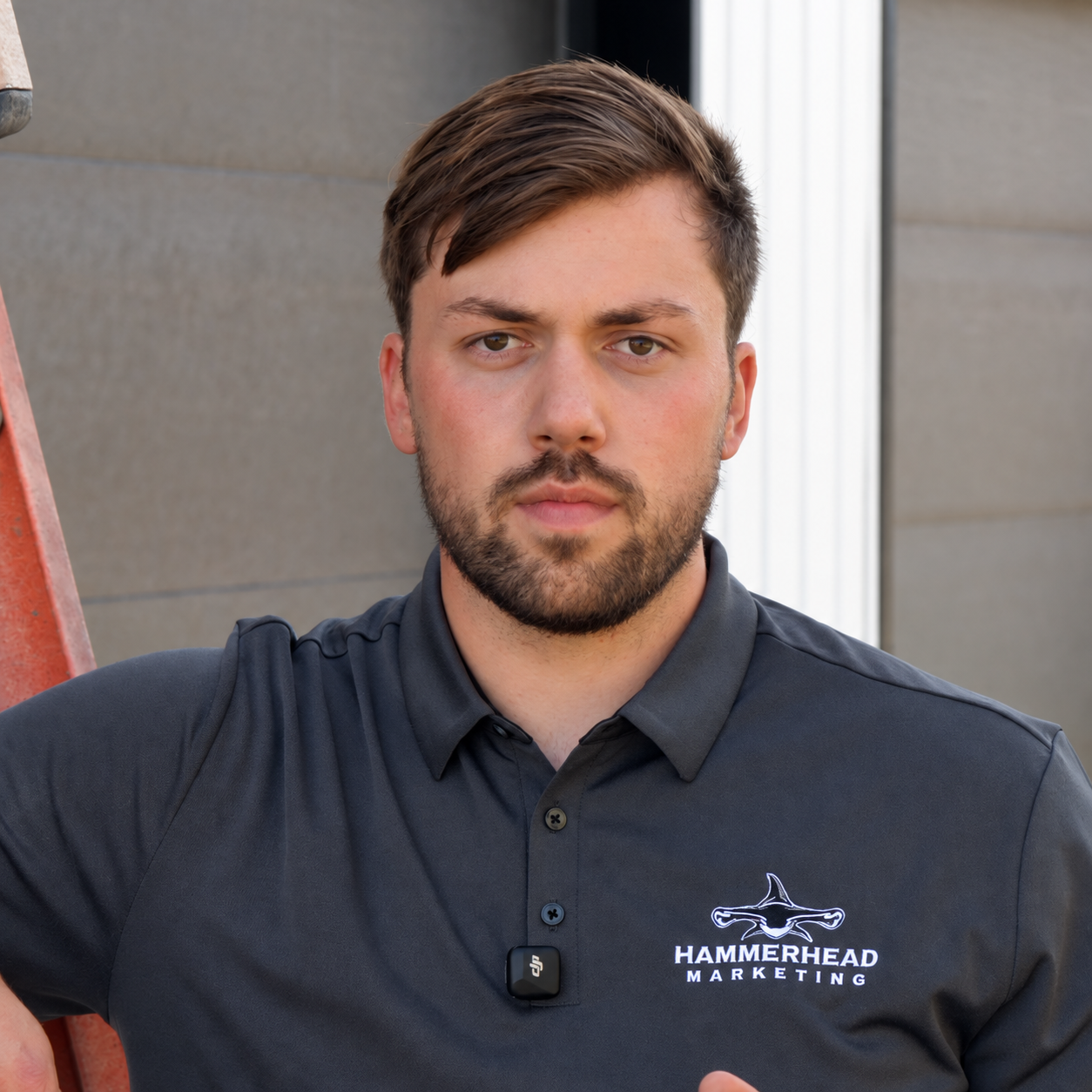
Who’s behind this.
I climbed and ran tree crews for years, so I understand what actually matters. Are the crews booked? Are the jobs worth doing? Is there actually money left over at the end? That’s what matters.
For the last four years, I’ve managed $1 million a month in Google ad spend, and that includes running Google Ads for dozens of roofing companies. I bring that up because it’s allowed us to see at scale what actually turns calls and estimate requests into sold jobs, and where most marketing leaves profit on the table.
We’re going to do our due diligence on your company, just like you should be doing yours on us. The math behind all of this, and Before-The-Quote Selling the way your homeowners will experience it, is on our due-diligence page.
Hammerhead Marketing
Straight answers before you apply.
What happens after I apply?
We check that your market is open first. One roofing company per market, so if yours is taken we’ll tell you instead of taking the call. Then you book a call and land on our due-diligence page: the math, a walk through Before-The-Quote Selling from the homeowner’s side, and short videos answering the questions roofers ask. Booking the call doesn’t reserve your market. Agreeing to work together does.
What should I bring to the call?
Whatever numbers you have. How many replacement estimates you get a month, what they cost you, how many turn into sold roofs, what your average replacement sells for, and roughly what you make on it. If you don’t know everything, bring what you have. We’ll figure out which of your three numbers is the biggest lever and what we’d attack first. If someone else decides on marketing spend with you, have them on the call.
What does it cost?
Two separate investments. There’s a one-time build fee to build, connect, and launch everything, then a monthly management fee to run it and keep improving the numbers. Your ad spend is separate: you pay Google directly, in your own account, and we never collect it or mark it up. We go through exact numbers on the call once we know your market and what you want to spend.
How much do I need to put into ads?
Be prepared for around $5,000 a month at minimum. For most roofing companies we’re looking for $7,500 to $10,000 a month if your market and capacity support it. That doesn’t mean we turn it on at $10,000 on day one. We normally start around $100 a day, make sure the calls and estimate requests are coming in and the costs make sense, then increase the budget. Enough volume early is what lets us find the bottleneck fast instead of guessing. The break-even section above shows how few additional sold roofs it takes to cover your ad spend.
What exactly do you guarantee?
Your cost per qualified estimate request for your first 30 days live. We agree on the number before you sign and it goes in your agreement. If we come in over it, you don’t pay our management fee for month two; you still cover your ad spend. A qualified estimate request is a homeowner in your market who called or filled out a form asking for a roofing estimate or inspection on their own home. We don’t guarantee sold roofs, close rate, or revenue. Those depend on your estimator and your pricing, and anyone who promises them is guessing with your money.
What should I expect in the first 30 days?
Straight answer: we can’t promise you’ll be profitable in 30 days, and we don’t make income claims. Google Ads doesn’t turn on perfect on day one; sometimes costs start high, sometimes something needs changing in the first week. Our job is to get enough volume coming through to find the bottleneck quickly and get the numbers where they need to be. At the same time, Unsold Quote Recovery goes back through the roofs you already quoted but didn’t sell, so month one doesn’t depend only on how fast a new campaign ramps. By the end of the month you’ll judge us on three things: what you paid us, what you spent on ads, and how much business it produced. You should.
How long until we’re live?
About a week from the day we have access to your Google Ads account, website, and tracking, plus your assets: logo, license and insurance details, review link, warranty details, service area, and your unsold quotes from the last two years. We’ve done it faster, but a week is what we aim for. Unsold Quote Recovery can start before the ads are even ramped.
Do you book the appointments?
No. We bring in the calls and estimate requests. Your office answers the phone and sets the appointments. That’s on purpose: the homeowner should be talking to your company, not a call center. Someone on your team needs to answer during business hours and return missed calls within a business day.
Do I have to change how I sell?
No. We plug Before-The-Quote Selling into the estimate process you’re already running. Your estimator still runs the appointment: inspects the roof, shows the evidence, explains the recommendation, asks for the job. The difference is the homeowner shows up already knowing what to compare besides price. Your office does two things: answer the calls and set the appointments, and mark quotes delivered and jobs sold.
I already run Google Ads, SEO, or Maps. Does that matter?
Good. Anything already producing calls and estimate requests at a cost that works stays. We don’t care where the estimate comes from. We look at your accounts before we say a word about them, then find where the numbers are breaking: not showing up enough, paying for searches you shouldn’t, calls nobody answers, tracking that can’t tell you which calls became sold roofs. And if your Google Ads are already producing estimates at a great cost, we’re not going to manufacture a problem. We scale what works or move to the next lever.
Why not just buy cheaper leads from Facebook or a lead company?
Because you don’t make money from cheap leads. You make money from sold roofs. A cheaper lead from somebody who wasn’t actively looking for a roofer can cost you more by the time you sell a job than an estimate request from somebody who went to Google looking for a roofing company today. Social media and lead sources can work, and if they’re producing for you, keep them. But we judge everything on the economics all the way through: what went out, what came back, what an estimate cost, what a sold roof cost, and whether you made money.
I’ve been burned by an agency before.
Then you should be skeptical, and we don’t blame you. So we back up what we can. The guarantee covers the part we control, with the number written into your agreement. After your first 60 days live we’re month to month, so we have to earn it every month. If we’re making you money, you’ll stay. If we’re not, you can leave.
Is there a contract?
The initial program is 60 days from the day your ads go live. After that, we’re month to month with 15 days’ notice and no cancellation fee.
Will you work with another roofer in my market?
No. One roofing company per market. Your protected market is set at signing based on where you actually work, by county or ZIP code, and we won’t take on a competitor inside it while you’re a client.
What about repairs?
If you do repairs, we run repair ads inside your budget and prepare the homeowner for either outcome, repair or replacement, before anyone drives out. At the house it’s evidence, explanation, recommendation: show them what you found, explain what it means, then recommend. If a repair makes sense, say so; that’s what makes the replacement recommendation credible when it’s the right call. The goal isn’t to turn every repair into a replacement. It’s to be the company already standing on the roof when replacement is the right answer.
Ready To Stay Booked Out &
Charge More Per Replacement?
Complete the short application below to book a call.
Form not loading? Open the application in a new tab.
We only take on as many companies at a time as we can build and launch properly. If you’re reading this, we’re still taking applications. That doesn’t mean your market is open. If it isn’t, we’ll tell you.